
Choosing the right software for your business is one of the most consequential technology decisions you will make. The wrong choice can drain budgets, frustrate teams, and stall growth. The right one can unlock efficiency, competitive advantages, and scalable revenue streams for years to come.
In 2026, this decision carries even more weight. Gartner forecasts worldwide IT spending to reach $6.31 trillion — a 13.5% year-over-year increase — with software spending growing at an even faster rate of 14.7%. Meanwhile, global AI spending is projected to hit $2.59 trillion, signalling that businesses are not simply buying technology; they are investing in intelligent, differentiated capabilities.
Whether you are a startup founder seeking speed-to-market, an SME scaling operations, or an enterprise CTO modernising legacy systems, this guide will help you understand the true trade-offs between custom software development and off-the-shelf solutions. By the end, you will have a clear framework for making the decision that best serves your unique business needs.
Global IT Spending 2026 (Gartner)
Software Spend Growth YoY
Worldwide AI Spending 2026
AI Spend Increase YoY
What Is Custom Software?
Custom software — also called bespoke or tailor-made software — is a solution designed, developed, and deployed specifically for one organisation’s unique processes, goals, and users. Unlike products built for the mass market, every feature, workflow, and integration point in custom software exists because your business needs it.
Think of it as the difference between buying a suit off the rack and having one tailored to your exact measurements. Both cover you, but only the tailored version fits perfectly, moves with you, and makes the right impression every time.
Custom software can take many forms: a web application that manages your proprietary workflow, a mobile app that connects your field teams in real time, a CRM system engineered around your unique sales cycle, or an ERP platform that unifies operations across departments.
Software Development Life Cycle (SDLC)
Key Characteristics of Custom Software
Custom software is distinguished by several core attributes. It is purpose-built, meaning every feature directly addresses a real business requirement rather than offering generic functionality that may or may not apply. It provides full ownership — you own the code, the data, and the intellectual property, giving you complete control over the product’s future. It is inherently integration-friendly because it can be engineered to connect seamlessly with your existing tech stack, databases, and third-party services. And it is scalable by design, built to grow alongside your business rather than hitting arbitrary user limits or feature ceilings.
What Is Off-the-Shelf Software?
Off-the-shelf software — also called commercial off-the-shelf (COTS), packaged software, or SaaS products — is a pre-built solution designed to serve a wide range of businesses with common needs. Products like Salesforce, SAP, QuickBooks, Slack, and Shopify fall into this category.
These solutions are developed by software companies that invest millions into building, maintaining, and updating a product used by thousands or millions of customers simultaneously. You pay a subscription or license fee to access the software, and you share the platform with every other customer.
Key Characteristics of Off-the-Shelf Software
Off-the-shelf solutions share several defining traits. They offer immediate availability — you can sign up and start using the product within hours or days rather than months. They come with proven reliability since thousands of users have already stress-tested the software across diverse scenarios. They provide regular updates managed by the vendor’s engineering team, meaning you benefit from new features and security patches without managing them yourself. And they typically offer community and ecosystem support through documentation, forums, marketplaces of plugins, and certified consultants.
Detailed Comparison: Custom Software vs Off-the-Shelf Software
The following comparison examines fifteen critical factors that business decision-makers should evaluate when choosing between custom and packaged solutions. No single factor should drive your decision — consider how they interact with your specific context, growth trajectory, and competitive landscape.
| Factor | Custom Software | Off-the-Shelf Software |
|---|---|---|
| Customisation | 100% tailored to your workflows | Limited; configuration within vendor boundaries |
| Deployment Time | 3–12 months depending on scope | Hours to days |
| Initial Cost | Higher upfront investment | Low subscription or license fee |
| Long-term Cost | Decreasing — no per-user fees | Increasing — grows with users and features |
| Scalability | Unlimited — architecture designed for growth | Constrained by vendor tier limits |
| Integration | Seamless with any system via custom APIs | Dependent on available connectors/plugins |
| Security | Smaller attack surface; private codebase | Larger target; shared vulnerabilities |
| Ownership | Full IP and code ownership | No ownership; vendor-dependent |
| Competitive Edge | High — unique capabilities | Low — competitors use same tools |
| Maintenance | Your responsibility (or partner’s) | Handled by vendor |
| Updates | On your schedule, your priorities | Vendor’s roadmap; may break workflows |
| Vendor Lock-in | None | High — migration is costly |
| User Training | Built around your team’s existing habits | Team adapts to software’s logic |
| Compliance | Built to meet specific regulations | Generic compliance features |
| AI Integration | Deep, custom AI/ML pipelines | Pre-built AI features (if available) |
Benefits of Custom Software Development
Custom software development delivers advantages that compound over time, turning your technology from a cost centre into a strategic asset. For businesses operating in competitive or highly regulated industries, these benefits often represent the difference between leading the market and merely participating in it.
Core Benefits
- Perfect Process Fit: Software mirrors your actual operations rather than forcing you to adapt to someone else’s vision of how work should flow.
- Scalability Without Limits: Architecture designed from day one to handle your projected growth — no surprise tier upgrades or per-seat cost explosions.
- Competitive Differentiation: Unique capabilities your competitors cannot simply purchase, creating sustainable moats around your business processes.
- Full Ownership & Control: You own the source code, the data, and the roadmap — no vendor can sunset your critical business tool.
- Superior Security: Private codebase means attackers cannot study your system publicly; security can be engineered into every layer.
- Deep Integration: Connect seamlessly with legacy systems, third-party services, IoT devices, or any API — no plugin limitations.
- Long-term Cost Efficiency: No recurring per-user fees means costs stabilise as your team grows — unlike SaaS bills that scale linearly with headcount.
- AI & Automation Tailored to Your Data: Build machine learning models trained on your specific data sets for personalised insights no generic tool can match.
Benefits of Off-the-Shelf Software
Off-the-shelf software is not inherently inferior — it serves many businesses exceptionally well, particularly those with standard processes, tight timelines, or limited initial budgets. Dismissing packaged solutions outright would be just as misguided as adopting them without critical evaluation.
Core Benefits
- Immediate Deployment: Start using the software within hours or days — critical when speed-to-market is your primary constraint.
- Lower Upfront Cost: Monthly subscriptions spread the financial commitment, preserving cash flow for early-stage businesses.
- Proven & Battle-Tested: Millions of users have surfaced and resolved bugs before you encounter them.
- Vendor-Managed Updates: Security patches, new features, and performance improvements arrive without effort on your part.
- Ecosystem & Community: Rich plugin marketplaces, integrations, documentation, and community forums accelerate problem-solving.
- Lower Risk for Standard Processes: If your needs align with 80%+ of the product’s capabilities, the risk-reward ratio favours the packaged solution.
Limitations of Custom Software
Honest evaluation demands acknowledging where custom development introduces challenges. Understanding these limitations helps you plan effectively and mitigate risks before they materialise.
Challenges to Consider
- Higher Initial Investment: Custom development requires meaningful upfront capital — though phased approaches can distribute costs over time.
- Longer Time-to-Deployment: Building from scratch takes months; you need patience and a clear project roadmap.
- Requires a Reliable Partner: Success depends heavily on choosing the right software development partner with proven expertise.
- Ongoing Maintenance Responsibility: You or your partner must handle hosting, security patching, performance monitoring, and updates.
- Scope Creep Risk: Without disciplined project management, features can expand beyond the original vision and budget.
Limitations of Off-the-Shelf Software
The convenience of packaged software comes with trade-offs that many businesses discover only after they have committed — often when it is most expensive to change course.
Challenges to Consider
- Limited Customisation: You work within the vendor’s boundaries; workflows that don’t fit must be adapted manually or through expensive workarounds.
- Escalating Costs: Per-user pricing, add-on modules, and premium tiers create costs that grow faster than your revenue as you scale.
- Vendor Lock-in: Your data, workflows, and team training become tied to one provider — migration costs grow every year you stay.
- Shared Roadmap: Features are prioritised for the broadest customer base, not your specific needs; critical requests may wait years.
- Security Risks: Public codebases attract targeted attacks; vulnerabilities affect all customers simultaneously.
- Integration Limitations: If the API doesn’t support your use case or the plugin doesn’t exist, you are stuck.
- Forced Updates: Vendor updates can change interfaces, remove features, or break existing workflows without your consent.
Who Should Choose Custom Software?
Custom software development is the right choice when your business situation includes one or more of the following characteristics. The more boxes you tick, the stronger the case becomes for investing in a tailor-made solution.
Businesses with unique processes that cannot be replicated by standard tools benefit enormously from custom solutions. If your competitive advantage lives in how you operate — your proprietary workflow, your unique service delivery model, your differentiated customer experience — then generic software forces you to dilute what makes you special.
Rapidly scaling companies that are hiring teams, expanding to new markets, or experiencing exponential user growth need software that scales without per-seat cost penalties. A custom-built platform eliminates the ceiling that SaaS pricing tiers impose.
Enterprises managing complex integrations across ERP, CRM, supply chain, and legacy systems need seamless data flow that off-the-shelf connectors rarely deliver without significant middleware investment.
Businesses in regulated industries — healthcare, finance, insurance, government — need software that meets specific compliance requirements built into the architecture, not bolted on as an afterthought.
Organisations seeking AI-driven differentiation need custom machine learning pipelines trained on their proprietary data, not generic AI features available to every competitor.
Who Should Choose Off-the-Shelf Software?
Off-the-shelf software remains the pragmatic choice in several well-defined scenarios. There is no shame in choosing a packaged solution — it becomes problematic only when it is chosen by default rather than by design.
Early-stage startups validating a business model benefit from immediate deployment. When you need to test market assumptions quickly, spending months building custom software before you have confirmed product-market fit represents unnecessary risk.
Businesses with standard, well-understood processes — basic accounting, simple project management, standard email marketing — rarely gain competitive advantage from custom-building these capabilities. When your process matches the tool’s design, the tool works well.
Teams with minimal technical capacity who cannot manage ongoing development partnerships may find vendor-managed solutions more sustainable in the near term.
Organisations with extremely tight budgets that cannot absorb upfront development costs, even when the long-term math favours custom solutions, need to start somewhere — and packaged tools provide that starting point.
Cost Comparison & Total Cost of Ownership
The most common mistake in software evaluation is comparing only the initial price tag. A thorough Total Cost of Ownership (TCO) analysis over three to five years frequently reveals that custom software — despite higher upfront investment — delivers superior value for growing businesses.
For businesses with 50+ users, the TCO break-even point between custom and off-the-shelf typically occurs between Year 2 and Year 3. Beyond that point, every month of operation delivers increasing cost advantage to the custom solution — because your costs plateau while SaaS subscriptions continue climbing with every new seat, module, and tier upgrade.
The cost equation becomes even more favourable when you factor in productivity gains. Custom software eliminates the manual workarounds, data re-entry, and process friction that teams silently absorb when off-the-shelf tools don’t quite fit. McKinsey research indicates that organisations with well-integrated, purpose-built technology stacks achieve 20-30% higher operational efficiency than those stitching together generic tools.
Real Business Examples
Theory is valuable, but practical examples illustrate how the custom vs off-the-shelf decision plays out in real business contexts. These scenarios reflect common patterns we encounter across industries.
Regional Hospital Network — Patient Management System
A growing hospital network with 12 facilities found that generic Electronic Health Record (EHR) systems could not accommodate their unique interdepartmental referral process and regional compliance requirements. Custom software allowed them to build a patient management platform that integrated seamlessly with existing lab systems, automated their specific regulatory reporting, and reduced patient intake time by 40%. The system paid for itself within 18 months through operational efficiency gains alone.
National Freight Company — Fleet & Route Optimisation
A logistics company managing 800+ vehicles across multiple regions evaluated several off-the-shelf fleet management solutions. None could handle their unique combination of cold-chain requirements, multi-modal transport (road + rail), and real-time client reporting demands. A custom mobile application with AI-powered route optimisation reduced fuel costs by 22% and delivery time by 15% — competitive advantages no off-the-shelf tool could deliver.
Fashion Marketplace — Custom CRM & Vendor Portal
A multi-vendor fashion marketplace outgrew HubSpot when their vendor relationship management needs diverged drastically from standard B2B sales cycles. A custom CRM solution combined vendor onboarding, commission tracking, return management, and influencer coordination into one platform — eliminating three separate SaaS subscriptions and reducing vendor management overhead by 60%.
FinTech Startup — Validating with Standard Tools
A FinTech startup in the payment reconciliation space wisely chose off-the-shelf tools (Notion for internal ops, Intercom for support, Stripe for payments) during their first 18 months to preserve capital while validating product-market fit. Once they reached 200+ enterprise clients with proven revenue, they engaged a development partner to build custom infrastructure — transitioning from tools that limited their service level agreements to a platform that enabled them.
Software Trends Shaping Decisions in 2026
The technology landscape of 2026 introduces factors that did not exist even two years ago. Understanding these trends helps you make a decision that remains sound for the next three to five years, not just today.
AI-First Development
With worldwide AI spending reaching $2.59 trillion in 2026 (Gartner), artificial intelligence has moved from experimental to essential. Custom software allows businesses to embed AI capabilities at the architectural level — predictive analytics, natural language interfaces, intelligent automation, and computer vision tailored to proprietary data sets. Off-the-shelf tools offer generic AI features, but they train on broad data that lacks your business’s unique patterns and insights.
Cloud-Native Architecture
The shift to cloud-native development using microservices, containers, and serverless computing means custom software can be built with enterprise-grade scalability and reliability from day one. AWS, Google Cloud, and Azure provide infrastructure that was once available only to tech giants — your custom solution can leverage the same foundations as Netflix or Spotify.
Composable Business Architecture
Gartner’s concept of composable business — where organisations build applications from interchangeable, modular components — favours custom development. Rather than being locked into a monolithic SaaS platform, businesses can assemble precisely the capabilities they need using API-first design, headless services, and reusable microservices.
Hyper-Automation
The convergence of AI, machine learning, robotic process automation, and custom workflow engines enables end-to-end business automation that eliminates manual steps from entire process chains — not just individual tasks. Custom software is the natural vehicle for hyper-automation because it can orchestrate across your entire technology stack without the limitations of pre-built integrations.
Common Mistakes to Avoid
After working with hundreds of businesses on their technology decisions, we consistently observe the same mistakes — regardless of whether companies ultimately choose custom or off-the-shelf solutions. Awareness of these pitfalls alone can save you months of frustration and significant budget overruns.
Mistake 1: Evaluating Only Upfront Cost
This is the single most expensive mistake businesses make. A SaaS tool costing $50 per user per month seems affordable until you multiply it by 200 users over five years — that is $600,000 in subscription fees alone, with zero ownership at the end. Always calculate the full Total Cost of Ownership before deciding.
Mistake 2: Skipping Thorough Requirements Analysis
Whether choosing custom or off-the-shelf, businesses that fail to document their actual needs — not assumed needs — end up with mismatched solutions. Invest time upfront in mapping your processes, pain points, integration requirements, and growth projections.
Mistake 3: Following Industry Hype
Choosing software because it is popular, a competitor uses it, or a review site ranked it highly ignores the fundamental question: does it solve your specific problems? Popularity and suitability are entirely different metrics.
Mistake 4: Underestimating Change Management
Even the best software fails without user adoption. Budget time and resources for training, documentation, and the cultural shift that accompanies any technology change — whether it is a new SaaS tool or a custom platform.
Mistake 5: Ignoring Scalability Requirements
Your business in three years will look different from today. Choose software — whether custom or off-the-shelf — that can accommodate your realistic growth trajectory without requiring a complete replacement when you hit limits.
Decision Framework: How to Choose
Use this structured framework to move from confusion to clarity. Each step builds on the previous one, creating a logical path toward the right decision for your specific situation.
- Audit Your Current Processes Map every workflow your software must support. Document pain points, manual workarounds, and bottlenecks in your current system. Identify which processes are standard across your industry and which represent your competitive differentiation.
- Define Precise Requirements Separate must-have features from nice-to-haves. Include integration requirements, security and compliance needs, expected user count over 3-5 years, and performance benchmarks. This document becomes your evaluation criteria.
- Evaluate Process Uniqueness If 80%+ of your requirements match an off-the-shelf solution, start there. If your core differentiating processes require heavy customisation of a packaged tool, the custom path likely delivers better outcomes.
- Calculate Five-Year TCO Include all costs: development/subscription fees, hosting, maintenance, training, lost productivity from workarounds, integration middleware, and opportunity cost of limitations. Compare both paths honestly.
- Select the Right Partner Whether you choose a SaaS vendor or a custom development partner, evaluate their track record, support quality, technology expertise, communication practices, and cultural fit. Your partner is as important as the technology itself.
Why Partner with GateTouch for Custom Software
If your analysis points toward custom software — or if you need expert guidance to make the right decision — GateTouch brings 12+ years of experience building solutions that drive measurable business outcomes.
GateTouch operates as a full-cycle technology partner, not just a development vendor. Our approach encompasses everything from initial consulting and requirements discovery through architecture design, development, testing, deployment, and ongoing maintenance and support.
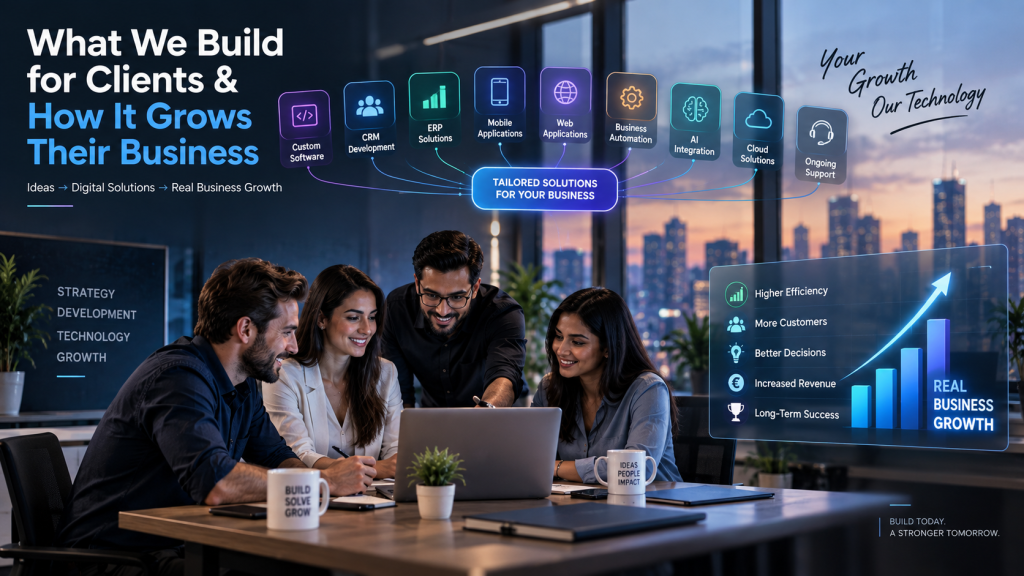
Our core expertise spans custom software development, CRM and ERP systems, mobile application development, web application development, cloud architecture, AI and machine learning integration, business process automation, and UI/UX design.
What sets GateTouch apart is our commitment to understanding your business before writing a single line of code. We do not sell technology for technology’s sake — we architect solutions that deliver measurable returns on investment, aligned with your growth objectives and market position.
With 12+ years of experience and hundreds of successful projects across industries and geographies, GateTouch has built a reputation for quality, transparency, and long-term client partnerships. Our clients consistently highlight our responsive communication, technical depth, and commitment to delivering beyond expectations.
Ready to Make the Right Software Decision?
Book a free consultation with GateTouch’s team. We will help you evaluate your options, define requirements, and build a technology roadmap aligned with your business goals.
Conclusion
The choice between custom software and off-the-shelf software is not about which option is universally better — it is about which option is better for your specific business, at your specific stage, with your specific goals and constraints.
Off-the-shelf software excels when your needs align with standard processes, when speed-to-deployment is critical, or when you are still validating your business model. It provides a fast, low-risk starting point.
Custom software becomes the superior choice when your competitive advantage depends on unique processes, when you are scaling beyond the limitations of packaged tools, when security and compliance require deep architectural control, or when you need AI and automation capabilities tailored to your proprietary data.
In 2026 — with AI reshaping every industry, cloud infrastructure democratising enterprise capabilities, and digital transformation accelerating across all sectors — the businesses that thrive will be those that choose technology strategically rather than reactively. Whether that means a carefully selected SaaS stack or a purpose-built custom platform, the key is making the decision intentionally, with clear data and expert guidance.
If you are ready to explore what custom software could do for your business — or if you simply want an expert perspective on your current technology strategy — reach out to the GateTouch team. We are here to help you build technology that drives real business growth.
Frequently Asked Questions
Custom software is built specifically for your business processes and requirements, while off-the-shelf software is a pre-built product designed for a broad market. Custom solutions offer complete flexibility and ownership, whereas packaged software provides faster deployment at lower initial cost.
Custom software development typically takes 3 to 12 months depending on complexity. A simple MVP can be ready in 8-12 weeks, while enterprise-grade platforms with complex integrations may require 9-18 months of development.
Custom software has higher upfront costs but often delivers better long-term ROI. Off-the-shelf software has lower initial investment but accumulates licensing fees, per-user charges, and customisation costs over time. A 5-year TCO analysis often favours custom solutions for growing businesses.
CRM (Customer Relationship Management) software manages customer interactions, sales pipelines, and marketing campaigns. You may need a custom CRM if your sales process is unique, you require deep integration with existing systems, or off-the-shelf CRMs like Salesforce or HubSpot don’t align with your workflow.
ERP (Enterprise Resource Planning) software integrates core business processes including finance, HR, inventory, and operations into one system. Custom ERP is ideal when your industry has unique workflows, regulatory requirements, or when commercial ERPs require excessive customisation to fit your needs.
Yes. Custom software can incorporate AI capabilities including machine learning, natural language processing, predictive analytics, and computer vision. This allows businesses to automate complex decisions, personalise user experiences, and gain competitive advantages not available in generic software.
Cloud-based custom software offers scalability on demand, reduced infrastructure costs, global accessibility, automatic updates, enhanced disaster recovery, and the ability to scale resources based on actual usage rather than peak capacity planning.
Choose a mobile app when you need offline access, push notifications, device hardware integration (camera, GPS), or a presence on app stores. Choose a web application for broader accessibility, easier updates, lower development costs, and when users primarily access your service from desktop browsers.
Business process automation uses technology to perform repetitive tasks without manual intervention. Custom software enables automation tailored precisely to your workflows — from invoice processing and inventory management to customer onboarding and reporting — eliminating inefficiencies that generic tools cannot address.
Custom software can be more secure than off-the-shelf solutions because it presents a smaller attack surface (hackers cannot study it publicly), security is built into the architecture from day one, and you have full control over data handling, encryption, and access policies.
Healthcare, finance, logistics, manufacturing, real estate, education, and e-commerce benefit significantly from custom software due to unique regulatory requirements, complex workflows, and the competitive advantage that tailored solutions provide.
Yes. A phased migration strategy allows you to gradually transition from packaged software to a custom solution. This typically involves data migration planning, API integration during the transition period, parallel running of both systems, and staff training on the new platform.
Digital transformation is the integration of digital technology into all areas of business to fundamentally change operations and deliver value to customers. Custom software is a key enabler because it allows organisations to digitise unique processes that generic software cannot adequately address.
Calculate ROI by measuring time saved through automation, revenue increase from improved processes, cost reduction from eliminating multiple software subscriptions, customer retention improvement, and competitive advantages gained. Most businesses see positive ROI within 12-24 months of deployment.
GateTouch brings 12+ years of experience delivering custom software, CRM, ERP, mobile apps, web applications, AI integration, and cloud solutions. With a full-cycle approach from consulting to post-launch support, GateTouch serves as a long-term technology partner committed to your business growth.
Let’s Build Something Exceptional Together
Whether you need custom software, CRM, ERP, a mobile app, or AI integration — GateTouch is your partner for digital growth.