
Every client comes to us with a different problem. What they’re actually asking for is almost always the same thing: technology that makes the business grow instead of holding it back.
Nobody calls a software company because they want software. They call because something in the business isn’t working the way it should — leads are falling through the cracks, a manual process is eating up hours every week, or the business has simply outgrown the systems it started with.
Over 12 years of projects, the requests have taken a lot of different shapes. But almost all of them map onto a small set of underlying needs — and each one maps onto something specific we build, and a specific way it changes the business afterward.
What Clients Actually Come to Us With
Here’s the pattern, laid out plainly:
| What the Client Is Dealing With | What We Build | What Changes for the Business |
|---|---|---|
| No real digital presence, or a site that doesn’t convert | A custom website or web app built around the customer journey | More visitors turn into leads and customers |
| Core processes still run on spreadsheets or email | Custom software or workflow automation | Hours of manual work removed every week |
| Sales, support, and operations data live in disconnected tools | Custom CRM/ERP integration | One view of the customer, fewer dropped handoffs |
| An idea that needs to be tested with real users, fast | An MVP — a lean, working first version | Validated demand before the big spend |
| Growth is capped by how many locations or franchisees can be coordinated | A multi-stakeholder management portal | Scale to more locations without proportional overhead |
| Sensitive data, or customers who ask about compliance | Secure, GDPR-aligned development | Fewer risk conversations standing between you and a sale |
The rest of this article walks through the two ends of that table in more depth — the requirement, and what actually gets delivered — using two real projects as evidence, not just a services list.
From Requirement to Build: What We Actually Do About It
“We don’t have a strong digital presence”
This is usually the first conversation. A business either has no real web presence, or has a site that was built years ago and no longer represents what the company does. We build custom websites and web applications designed around what a visitor is actually trying to do — book something, request a quote, compare options — rather than a template with the company’s name on it.
“We’re stuck doing everything manually”
Spreadsheets, shared inboxes, and manual data entry are the most common growth ceiling we see. It’s rarely one big fix — it’s custom software and workflow automation that removes the specific repetitive steps costing the most time, whether that’s onboarding, invoicing, scheduling, or reporting.
“Our systems don’t talk to each other”
Sales uses one tool, support uses another, and nobody has the full picture of a customer. This is where custom CRM development and integration work comes in — connecting the tools a business already relies on instead of forcing a rebuild of everything at once.
“We have an idea, but no proof it will work”
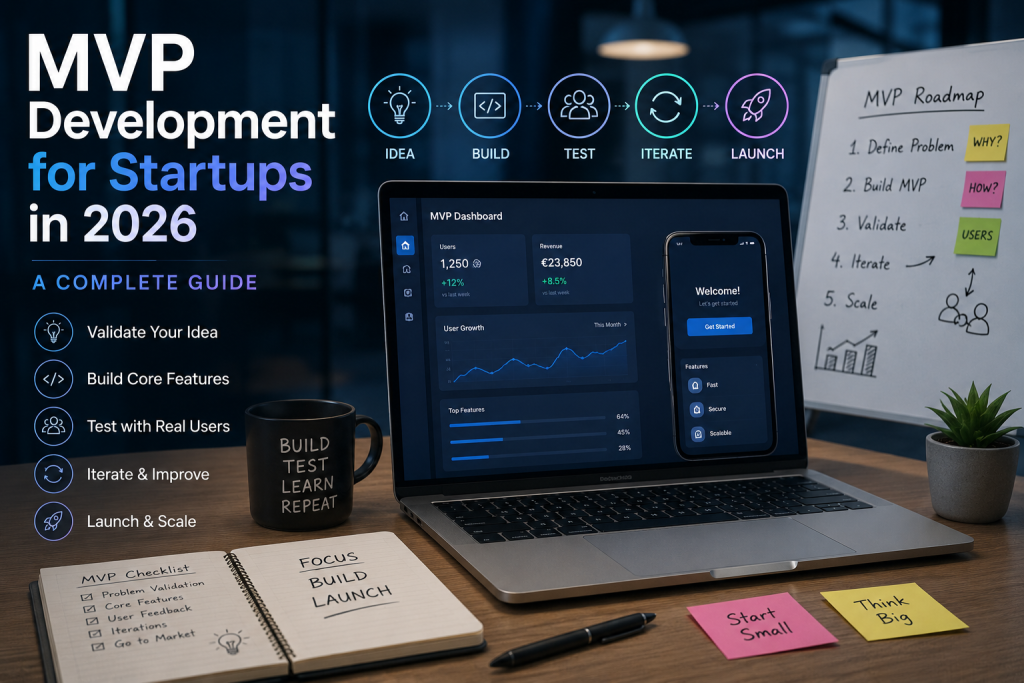
Before a business commits a large budget, it needs to know real users want what it’s building. We scope and build lean, working MVPs — see our full breakdown of MVP development for startups — so the first release is a test, not a bet.
“We’re growing, but our systems can’t grow with us”
This shows up most clearly with multi-location and franchise businesses, where the operational complexity multiplies with every new site added. The fix is a centralized platform purpose-built for that structure — which is exactly what our Taximom project, below, was built to solve.
Real Projects: What “Built for Growth” Looks Like
It’s easy to claim a build “drives growth.” Here’s what that’s actually looked like on two real Gatetouch projects.
Spotiz — Turning Unused Parking Space Into Revenue
The Problem
Urban parking shortages cause traffic congestion, wasted fuel, and blocked lanes — while a huge amount of private parking space sits unused every day.
What We Built
A two-sided marketplace app where space owners list availability and pricing, drivers search and book nearby spots, and secure payments run through the platform end-to-end.
The Growth Angle
The software didn’t just digitize parking — it created a new revenue stream for space owners and a new business model for the platform itself, built entirely around software that didn’t exist before.
Taximom — Coordinating a Multi-Location Business From One Platform
The Problem
Managing child transportation safely across multiple franchise locations meant juggling security, scheduling, and communication between owners, drivers, and parents — with no central system tying it together.
What We Built
A role-based portal with multilevel authentication, personalized dashboards for each stakeholder, route optimization, real-time communication, and centralized tools for franchise contracts and payments.
The Growth Angle
Centralizing operations meant the business could add new franchise locations without adding proportional administrative overhead — the platform, not headcount, absorbed the complexity of scaling.
The common thread in both projects isn’t the industry — it’s that the software removed a specific ceiling on growth: unused inventory in one case, administrative overhead in the other.
How We Work: From Requirement to Launch
Whatever the project, the process that gets a requirement to a working, growth-ready product looks broadly the same:
Discovery & Scoping
We start with the business problem, not the tech — understanding who uses the system, what “done” looks like, and what constraints (budget, timeline, compliance) actually matter.
Design & Prototyping
UI/UX design maps the real user journey before a line of production code is written, so the build starts from something the client has already seen and approved.
Agile Development
Work is built in sprints with regular check-ins, so the client sees progress continuously rather than waiting months for a single reveal.
Testing & QA
Every build goes through functional, performance, and security testing before launch — not after something breaks in production.
Launch, Support & Growth
Post-launch support covers fixes and monitoring, with the option of ongoing maintenance and, where relevant, digital marketing to help the new product actually get found.
Signs Your Business Needs This Now
You’re probably at this point if:
- Core operations still depend on spreadsheets, shared inboxes, or manual handoffs between tools.
- Your website or app was built years ago and no longer reflects what the business actually does.
- You’re adding headcount to manage work that a system could handle instead.
- You can’t get a single, current view of a customer without checking three different tools.
- You have a product idea but no way to test it without a large upfront build.
- You’re expanding to new locations, markets, or franchisees and your current setup won’t stretch that far.
Recognize your business in any of this?
Tell us what’s actually slowing things down. We’ll tell you honestly what’s worth building first — no generic pitch, no obligation.
Frequently Asked Questions
How do I know if I need custom software or an off-the-shelf tool?
If an off-the-shelf tool covers most of what you need with minor workarounds, it’s usually the faster, cheaper route. Custom software makes sense once you’re paying for features you don’t use, stitching multiple tools together with manual work, or your process is specific enough that no off-the-shelf product fits it well.
How long does a typical project take?
A focused MVP or first version typically takes 8–14 weeks depending on scope. A larger platform, like a multi-stakeholder portal, takes longer because of the extra roles, permissions, and integrations involved. We scope this precisely during discovery before any commitment.
Can you improve or rebuild an existing system instead of starting over?
Yes. Most engagements aren’t a blank slate — they involve auditing an existing website, app, or internal system, then deciding what to keep, what to refactor, and what to rebuild. A full rebuild is only recommended when the existing codebase is genuinely holding the business back.
What happens after the product launches — do you just hand it over?
No. Every build includes a post-launch support phase covering bug fixes, monitoring, and small improvements, with the option of an ongoing maintenance agreement for updates, security patches, and feature additions as the business grows.
Do you also help get the product in front of customers?
Yes. Alongside development, Gatetouch offers digital marketing services — SEO, SEM, social, and email — so a new website or app isn’t just built well, it’s also positioned to actually reach the customers it was built for.
What industries has Gatetouch built for?
Gatetouch has delivered projects spanning marketplace and mobility platforms, franchise and multi-location management portals, and custom business software across sectors — with over 12 years of experience serving clients from startups to established enterprises.
Conclusion
None of this starts with a technology decision. It starts with a business problem — a process that doesn’t scale, a market opportunity sitting untapped, an experience that loses customers before they convert. What gets built is just the answer to that problem, shaped to fit how the business actually works.
If any part of the table near the top of this article sounded familiar, that’s usually the sign it’s worth a conversation — not a commitment, just a clear look at what’s actually worth building first.